


This is more than an analysis of the prison system - Foucault is studying the 'production of the individual'. This was explained in the lecture using the idea of the 'Panopticon', the structure by which members of society, under fear that they are possibly or probably being scrutinised, become self-policing individuals.
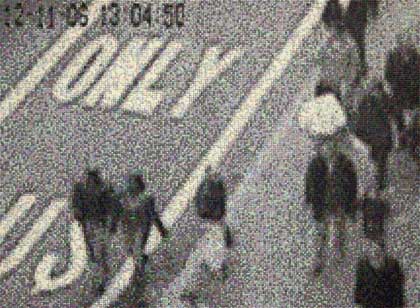
This can be applied to a modern-day British psyche. We are constantly aware of the CCTV and various other measures around us, that cause us to watch our own behaviour all the more intently. On my way to work in the West End, I noticed that large blue podiums had been erected in main tourist areas, at the top of which stood police officers.
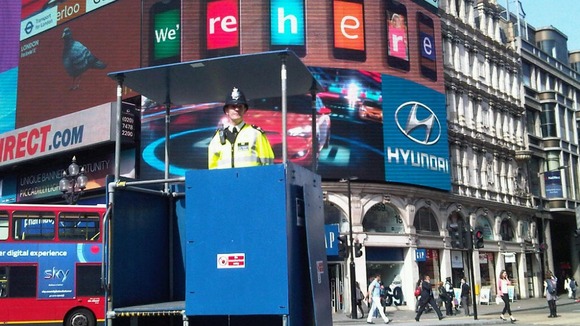
After a bit of research, I found out that this was an element of 'Operation Trafalgar', which has been 'designed to tackle crime, disorder and anti-social behaviour in the heart of London'. This move to in-person police scrutiny clearly takes its cues from psychological thought, creating a panopticon in the centre of London. The effects are clear - while we are afraid of scrutiny through CCTV, the direct cause to effect framework of punishing a crime is absent, allowing us to 'procrastinate' our concerns about being watched to a later time (perhaps when the police come knocking). Operation Trafalgar, with its highly-visible police force, means that the urge to self-police is much stronger owing to the immediacy of the threat of punishment.
[1] Foucault, Michael, 'Docile Bodies' in The Foucault Reader, ed. by Paul Rabinow, Penguin, London, 1986

No comments:
Post a Comment